- Hadi
- November 7, 2025
- 10:09 am
- 0 comments

Financial emergencies don’t wait for payday. When unexpected expenses arise — medical bills, car repairs, or family needs — many workers turn to short-term financial options for help. Traditionally, this meant taking a loan. But today, a growing number of employees are choosing a smarter, more responsible alternative: Earned Wage Access (EWA).
Let’s break down how EWA differs from traditional loans — and why it’s becoming a game changer for financial wellness.
What Is Earned Wage Access (EWA)?
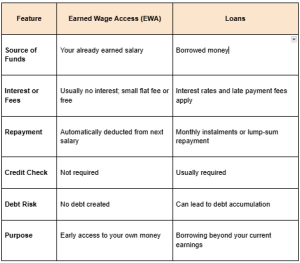
Earned Wage Access allows employees to access a portion of their already earned wages before payday. For example, if you’ve worked 15 days out of 30, you can withdraw the wages you’ve earned so far — instantly, without waiting for the end of the month. Platforms like Credex make this possible by connecting with employers’ payroll systems, letting employees withdraw their earned amount securely and transparently.
What Is a Loan?
A loan, whether from a bank, licensed moneylender, or informal source, involves borrowing money with the promise to repay later — usually with interest. Personal loans, payday loans, and microloans often come with processing fees, interest charges, and penalties if payments are late. While loans can help during emergencies, they can also lead to debt cycles if not managed responsibly.
EWA vs. Loans: Key DifferencesWhat Is a Loan?
A loan, wties if payments are late. While loans can help during emergencies, they can also lead to debt cycles if not managed responsibly.hether from a bank, licensed moneylender, or informal source, involves borrowing money with the promise to repay later — usually with interest. Personal loans, payday loans, and microloans often come with processing fees, interest charges, and penal
Why EWA Is a Healthier Option
No Debt Trap
- EWA isn’t a loan — it’s simply giving you access to what you’ve already earned. That means no interest, no compounding debt, and no risk of falling behind on repayments.
Instant Relief for Everyday Needs
- Workers can access funds anytime, helping them manage daily expenses and emergencies without relying on costly credit.
Better Financial Planning
- EWA gives employees visibility into how much they’ve earned in real-time, encouraging smarter budgeting and spending habits.
Employer Benefits
- Companies offering EWA see higher employee satisfaction, reduced turnover, and improved productivity — because financial stress is one of the biggest workplace distractions.
The Loan Trap: Why It’s Risky for Workers
High-interest loans or payday advances might seem quick and convenient, but they often come with hidden costs:
- Interest rates up to 18–30% or more
- Late fees that snowball into bigger debt
- Credit score impact for missed payments
In Malaysia and across Asia, many workers — especially those in the B40 or unbanked segments — end up spending months trying to repay small loans, often borrowing again just to cover old debts.
The Future of Financial Wellness
Earned Wage Access represents a shift from debt-based finance to earned-based finance. It empowers employees to use their own income flexibly, reducing reliance on loans and improving long-term financial health. For employers, adopting EWA through partners like Credex isn’t just a perk — it’s a statement of care, responsibility, and innovation.
Final Thoughts
EWA is not a loan — it’s financial freedom!
By helping workers access what’s rightfully theirs, Earned Wage Access builds trust, stability, and peace of mind — one paycheck at a time.
Related Article